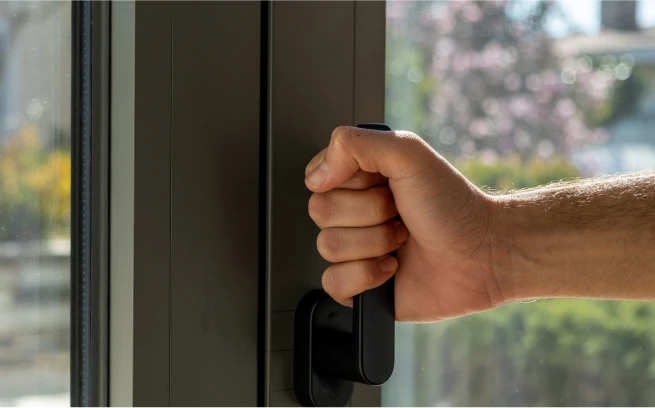




Practical and technical guide on aluminum enclosures
Enclosures are a key element in home comfort and the energy efficiency of buildings. A proper selection helps reduce heat loss in winter, limit overheating in summer, improve sound insulation, and prevent damp problems.
In Spain, the Technical Building Code (CTE, Basic Document HE – Energy Saving) establishes requirements for the thermal envelope and limits the energy consumption of buildings. At the European level, the Regulation (EU) 2018/1999 The Energy Union Governance and Climate Action Framework sets binding targets for energy efficiency and emissions reduction.
Official reference: CTE DB-HE Energy Saving
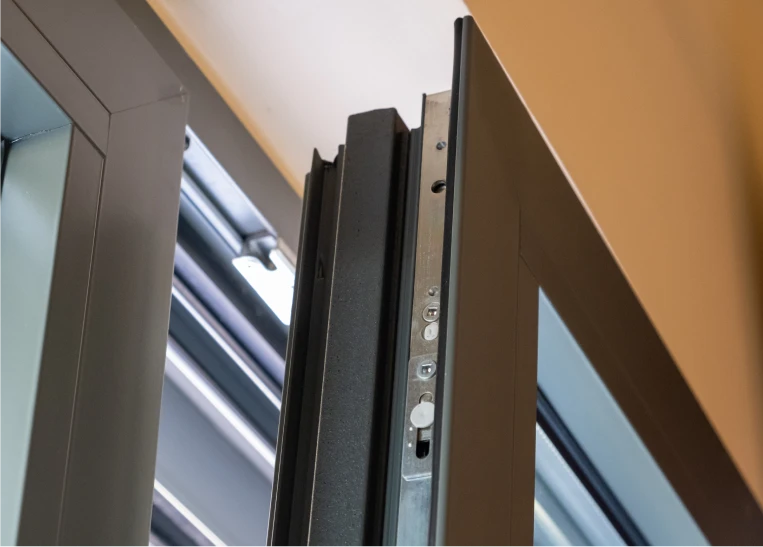
An efficient enclosure is one that, thanks to its design and materials, reduces energy loss and improves the thermal and acoustic insulation of the home.
Innovative aluminum enclosures incorporate thermal break (TB), which prevents the direct transmission of cold and heat through the frame. Compared to traditional enclosures without TB, they offer a significant improvement in energy efficiency and comfort.
Applied examples: casement windows with RPT and low-emissivity double glazing, which maintain a stable interior temperature and reduce the use of heating and air conditioning.
Official reference: Standard UNE-EN 14351-1:2006+A2:2016, on windows and exterior pedestrian doors.
Enclosures can be classified according to materials, glass and construction systems:
Supporting regulations: UNE-EN ISO 10077-1:2017, calculation of thermal transmittance of windows and doors.
The most common materials used in enclosures include:
- Aluminum (with or without RPT).
- PVC (notable for its insulation).
- Wood (natural and aesthetic, requires maintenance).
- Mixed (aluminium-wood, aluminium-PVC).
The most commonly used glass in enclosures are:
- Double glazing.
- Low emissivity.
- With solar control.
- Acoustic laminate.
The most common opening methods are:
- Folding.
- Practicable
- Slide.
- Tilt-and-turn, folding or sliding and lifting.
A quality aluminum enclosure offers multiple advantages:
- Energy efficiencyReduction in heating and air conditioning consumption.
- Thermal comfortMaintains stable temperature in winter and summer.
- Sound insulationExternal noise attenuation according to UNE-EN 14351-1.
- SustainabilityAluminum is 100% recyclable, contributing to the circular economy.
- Housing revaluationImproved energy efficiency, which increases real estate market value.
Official reference: Directive (EU) 2010/31 on the energy performance of buildings.
Enclosures can be classified according to materials, glass and construction systems:
Official reference: Status of European Regulations
- Verify that the enclosures have CE marking in accordance with the Construction Products Regulations.
- Request the technical sheet with the thermal (Uw) and acoustic (Rw) transmittance values.
- Prioritize double or triple glazing with an argon gas chamber.
- Choose carpentry certified with the AENOR quality seal.
- Ensure proper installation, following the IDAE (Institute for Energy Diversification and Saving) Window Installation Guide.